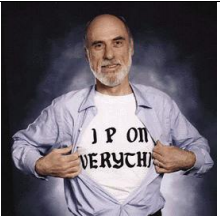
He was simply referring to the fact that the Internet is one dominant gene that is able to connect computers with many different genes.
It is a law that states states that the value of a telecommunications network is proportional to the square of the number of connected users of the system
They are located in Asia.
They are assisting the internet being widespread around the world, especially in places where people do not have access to computers.
The internet is designed to be much more dynamic and widespread than telephones and telegraphs ever were.
There was not any logic at first, but his experiment soon transformed into the internet.
They relate due to the fact that by receiving the digital signatures, you can ensure that the domain name and IP address are binded.
A sensor network is a network that is able to sense when devices that consume electricity have reached their peak. A perfect example is a smartgrid.
Discovering that a configuration is incorrect.
It holds high significance due to the fact that we want to be able to send data back and forth, or share it with other clouds.
The issue was that Vint Cerf was unaware of the fact that the nodes on a network had to be altered.
He described how he did an awful job at dealing with broadcast media. The main issue was that he turned the broadcast media into a point to point link.
A strong authentication is merely maintaining solid quantity identity. Any lack of strong authentication can serve as an issue because the cloud is unusable without authentication.
In internet context, an overrun problem is when someone is taking control of your possessions and using them against you.
He claims that the things that are created today may be interpreted differently in the future.
He is referring to data decay when he talks about rotten bits. A perfect example is that the things created today may be interpreted on a different basis in the future.
InterPlantary Internet is merely a conceived network in space, which consists of different network nodes that are able to directly communicate with each other.
A common carriage is merely a concept which states that the same set of rules should be applied to all users. It implies that as long as you're under contract, you pay the same amount as someone else in contract regardless of the difference in usage.
He is claiming that everything will be network capable in the future.